CJ Discovers Gloria Spent the Trust Fund and Fell Behind on the Mortgage
A Dog's JourneyCJ Discovers Gloria Spent the Trust Fund and Fell Behind on the Mortgage is the confrontation in which the threat of losing the family home becomes inseparable from CJ’s discovery that the money meant to support her has been spent. What begins with papers in Gloria’s private office turns into a rupture between mother and daughter: the house is six months behind on its payments, the trust cannot be tapped because too little remains, and Gloria’s account of spending the money clashes with CJ’s understanding of it as her father’s provision and her college fund.
The Papers and the Threat to the Home
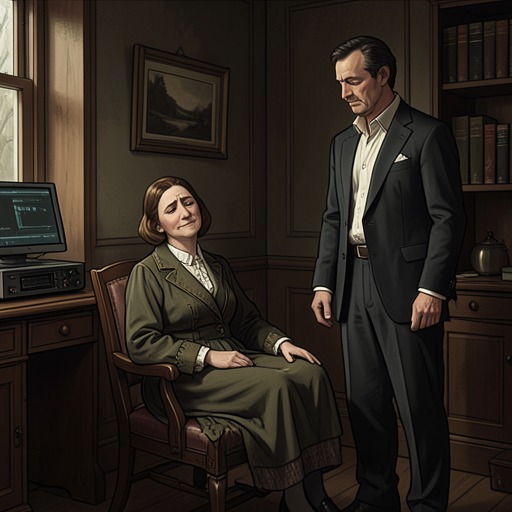
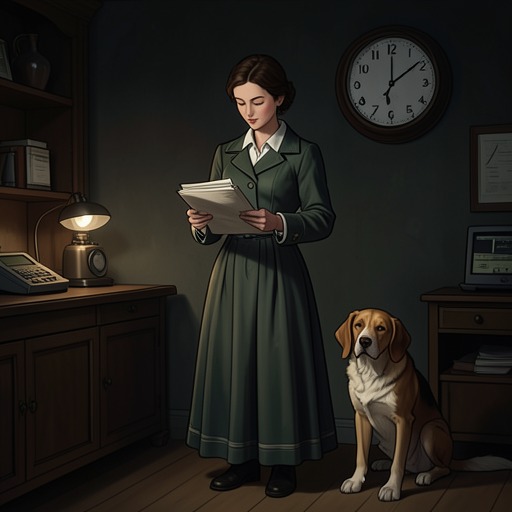
After returning to the house, CJ and Molly enter a room Molly has never been allowed into, where Gloria sits with papers. The room offers Molly none of the familiar reasons to settle in: there is no food or toy, so she curls into a ball while CJ opens drawers and examines documents. The papers abruptly turn the household’s financial difficulty into an immediate danger. CJ asks whether the house is in foreclosure; Gloria says she does not know because the matter is too confusing.
The documents say that the mortgage is six months behind and that foreclosure proceedings have begun. CJ stresses the consequence: unless something is done, they will lose the house. Gloria responds that Ted said he could lend her money, but the proposed loan does not resolve the deeper question of what happened to the resources already available to them. The scene shifts from an urgent housing problem to an inquiry into the family’s finances and Gloria’s responsibility for them.
The Trust and the Disputed Meaning of Support
CJ initially proposes using the trust her father established. She understands it to contain a provision for withdrawing funds when they are genuinely needed, giving surgery as an example and losing the house as another. Gloria’s silence and distraction make the proposal seem not to register. When CJ asks why the mortgage is behind, Gloria answers that there was not enough money in the trust.
That answer changes the stakes of the conversation. CJ becomes still as she grasps that the fund is depleted, and Molly nuzzles her hand while CJ ignores the dog. Gloria says the trust was never simply CJ’s money: it was established by CJ’s father so she could live, and Gloria insists that what she spent paid for CJ’s food and the house. She also includes their trips among those expenses. CJ singles out the cruise as an example of a vacation paid for by drawing on the trust, then challenges Gloria about her own cars and clothes. Gloria’s answer—that she had to have clothes—does not resolve the conflict between her claim that the spending served CJ and CJ’s sense that her father’s money was taken from her.
Anger, Departure, and the Call to Trent
The discovery turns CJ’s anger into an open break. She jumps up, rigid with rage, and Molly cowers at the force of it. CJ tells Gloria she hates her and calls her evil, then runs down the hallway sobbing. The scene’s movement—from quiet document-searching to an outburst and flight—makes the financial revelation a family confrontation rather than a matter of paperwork alone.
Molly follows CJ out. CJ gathers some things from the kitchen counter, gets into Gloria’s car, and Molly jumps into the front seat. As they drive down the street, CJ calls Trent. Through the call, she explains that Gloria spent the trust, disputes Gloria’s claim that the spending was for her, and identifies the fund as her college money. Her grief overwhelms Molly, who whimpers and puts her head in CJ’s lap. CJ also rejects the suggestion that she has stolen the car, arguing that Gloria bought it with money from the trust. In this immediate aftermath, both the family home and the car are recast through the same discovery: assets CJ had understood as part of her life with Gloria were funded, she believes, by money her father had set aside for her.
Consequences and Significance
The event exposes two connected forms of insecurity. Foreclosure proceedings threaten the place where CJ and Gloria live, while the depleted trust removes the financial reserve CJ expected could be used in a crisis. The six-month arrears make the threat concrete; the money’s disappearance makes it personal. Gloria presents her spending as support for her daughter, including food, housing, and trips, while CJ sees the cruise and Gloria’s personal purchases as evidence that the fund was used beyond its purpose. The scene leaves that disagreement unresolved.
CJ’s departure is immediate, not a settled solution to either problem. She is crying, driving Gloria’s car, and asking Trent whether she can come over with Molly. The call marks a turn from confronting Gloria inside the house to seeking help elsewhere. Molly’s presence links the practical consequences to the emotional ones: she follows CJ out, rides beside her, and responds to her grief even when CJ cannot attend to the dog. The revelation therefore changes the meaning of the family’s possessions and of the home itself, while leaving CJ’s next place to stay and the foreclosure threat unsettled.